Red Sea Shipping Threat Persists Despite Fewer Indiscriminate Attacks

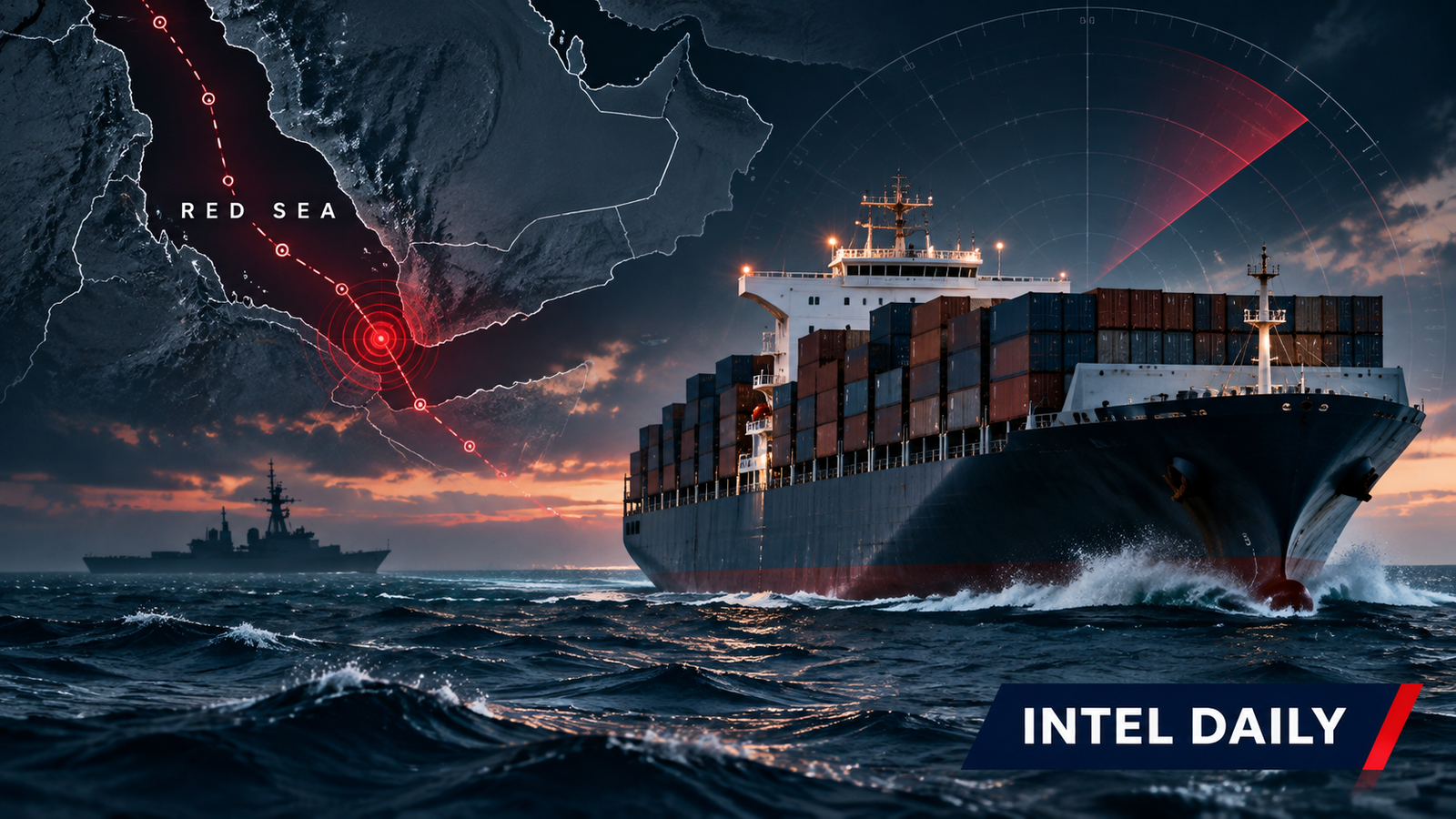
A new maritime security assessment separates a lower attack rate from the continuing risks around Bab el-Mandeb.
Shipping operators navigating the Red Sea face a security picture that is less indiscriminate than during earlier periods of Houthi attacks, but far from normal, according to an updated Norwegian Maritime Authority assessment.
In its October 30 notice, Norway maintained the highest International Ship and Port Facility Security level in the Bab el-Mandeb Strait, with an elevated level across the southern Red Sea, northern Gulf of Aden and an expanded section of the northern Red Sea. The assessment took effect on October 26 and remains in force until changed.
The distinction matters for shipowners deciding whether to resume transit, reroute vessels or purchase additional insurance. Fewer broad attacks do not remove the possibility of a serious incident in a narrow and strategically important waterway.
Warning levels remain high
Under maritime security rules, Level 3 indicates that specific protective measures should be maintained when an incident is probable or imminent, even if a precise target cannot be identified. Level 2 calls for additional protective measures because risk is heightened.
The Norwegian authority said the current pattern suggests a reduced risk of indiscriminate attacks on international merchant shipping, while emphasizing that the threat around Yemen and neighboring waters remains high. A reduced probability is not a declaration of safe passage.
That is a critical difference for vessels carrying containers, energy products and food. Decisions depend on the ship’s flag, route, cargo, insurance terms, crew protection and the operating company’s risk appetite.
A volatile coastline
The United Nations warned in September that fighting around Yemen’s western coastline and islands had increased volatility near the Bab el-Mandeb. UN officials said Houthi advances and government counteroffensives had raised concern even while commercial shipping flows appeared largely unaffected at that point.
The strategic consequences extend beyond maritime attacks. Fighting near coastal infrastructure can complicate port operations, raise security costs and limit the capacity of Yemeni institutions to oversee shipping.
In August, the International Maritime Organization supported a workshop in Aden on maritime security governance, bringing together Yemeni port, coastguard, customs and transport authorities. The exercise underscored that local coordination and maritime awareness remain part of the longer-term answer.
Costs extend beyond the strait
The Red Sea and Suez Canal link European and Asian markets. Avoiding the route can increase voyage distances and vessel requirements, while maintaining passage may involve security costs and contingency planning. The effects vary by vessel type and market.
No single change in security posture settles those tradeoffs. Shipping companies need reliable intelligence about incidents, practical protection and confidence that escalation can be contained.
Why the distinction matters
For governments, a maritime threat is also a question of diplomacy and regional stability. For shippers, it is a series of operational decisions about whether risk is acceptable on a particular voyage.
The judgment also illustrates why governments and shipping companies need consistent reporting. A suspicious approach, an explosion nearby and a confirmed intentional strike are not identical events. Treating them as equivalent can exaggerate the risk; discounting them altogether can conceal dangerous changes. Tracking incidents by type, location and attribution provides a better basis for deciding when protection requirements can safely be relaxed.
The October assessment offers an important calibration: the pattern of attacks may have changed, but Bab el-Mandeb remains a high-alert waterway. Normal commercial confidence will require sustained security improvements, not simply a quieter reporting period.