Opinion: Religious liberty needs a rule that survives an unpopular plaintiff

OPINION — The easiest religious liberty case is the one involving a congregation we admire. The most revealing case is the one involving a group we would rather ignore.
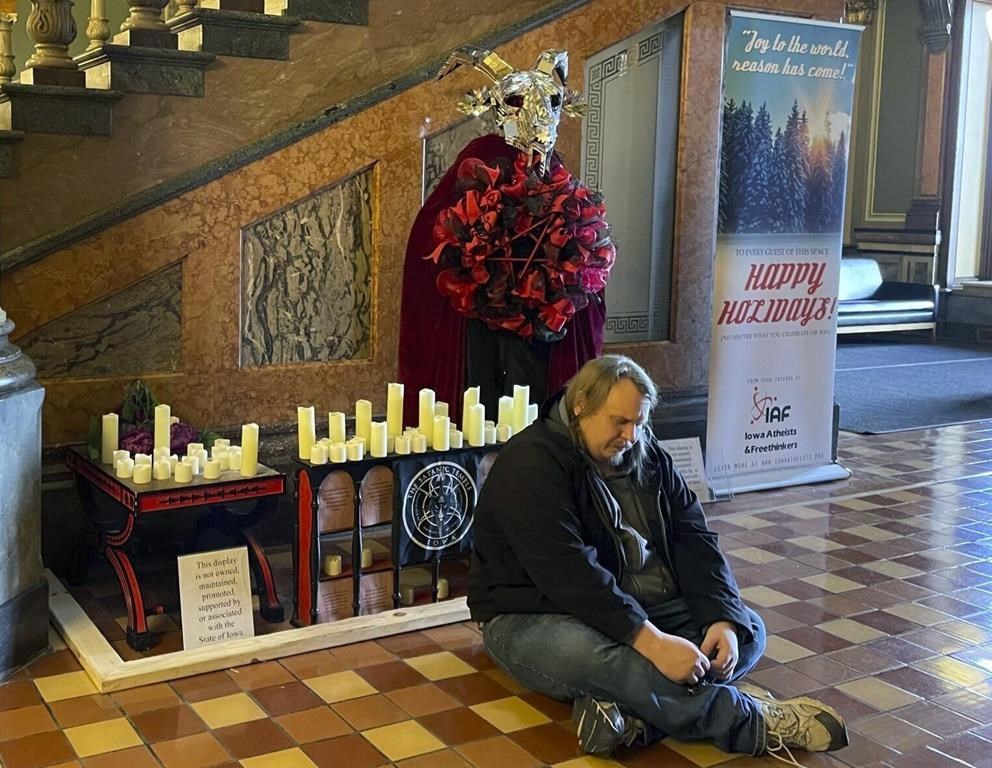
That is why Iowa’s latest Capitol dispute deserves a serious answer. The ACLU of Iowa announced Nov. 2 that a federal court ordered equal access for The Satanic Temple Iowa’s planned December event while its lawsuit continues. The organization says the state had denied access available to other groups. The order is preliminary, not a final resolution of all claims.
Many Christians will find the group’s message offensive. They need not surrender that judgment. Freedom of religion does not require theological agreement, and freedom of speech does not require applause.
It does require thinking carefully about the power we ask government to exercise. A public official authorized to exclude a disfavored belief today may be replaced tomorrow by someone who regards orthodox Christianity as the disfavored belief.
Separate conviction from state permission
A church can explain why it rejects another group’s religious claims. A parent can decide that a particular event is unsuitable for a child. A citizen can peacefully criticize a display. Those are exercises of freedom, not failures of tolerance.
The question changes when the state controls a public forum. Then the issue is which neutral rules govern access and whether officials apply them consistently. Personal disapproval is a dangerous substitute for an administrable standard.
Conservatives understand this problem when officials treat traditional beliefs as embarrassing. The argument should remain coherent when the political identities are reversed.
That does not mean every proposed use of every government building must be allowed. Officials need rules for schedules, capacity, safety and the actual purposes of a space. The rules should be clear enough to explain without first identifying the speaker’s religion.
Ask the question in reverse
A useful test is simple: Would we accept this restriction if the official disliked our church and praised the opposing group? If the answer is no, we should hesitate before celebrating the restriction.
The test does not erase meaningful differences among beliefs. It distinguishes our judgment about truth from the state’s authority to ration access. Confusing those questions makes civil liberty dependent on whichever coalition wins an election.
There is also a practical cost to turning every offensive expression into a demand for government intervention. It encourages citizens to outsource moral argument to officials. Instead of persuading neighbors, people ask the state to remove the need for persuasion.
Religious communities should be more confident than that. A faith capable of shaping a life does not need every public encounter arranged to prevent disagreement.
A durable conservative principle
The Iowa dispute will continue through litigation, and the legal record deserves careful reading. A press release from one party is not the whole case. But the broader principle can be stated without pretending every factual question has been settled.
Government should explain its rules in terms that protect everyone’s lawful expression, including expression officials dislike. Citizens remain free to condemn the message and decline to attend.
That combination protects conviction and limits power. It gives traditional religious communities a stronger foundation than the hope that their allies will always control the permit desk.
A right that works only for popular plaintiffs is a favor. Religious liberty should be more durable than that, especially for people who expect their own beliefs to remain unfashionable in influential places.