

Opinion: Interest rates should answer to evidence, not campaign calendars

OPINION — Every politician would like inexpensive borrowing, confident consumers and stable prices delivered on a convenient schedule. The economy has never agreed to that arrangement.
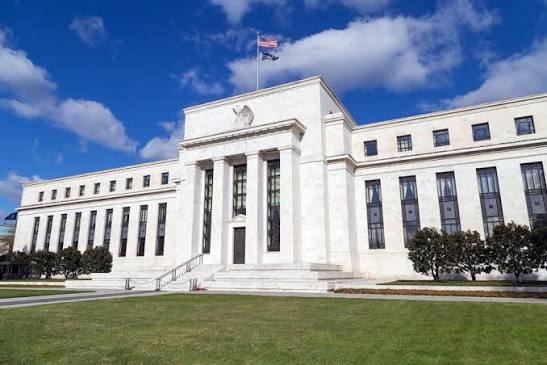
The Federal Reserve’s Oct. 28 decision illustrates the tension. The central bank held its benchmark target range at 3.75% to 4% in a 10-2 vote. The two dissenters wanted a quarter-point increase. The statement described strong economic activity and elevated inflation.
People can reasonably disagree with that decision. An independent central bank is not an infallible central bank. But disagreement should produce scrutiny of the evidence, not a demand that interest rates become another instrument of campaign management.
The conservative case for predictable money is straightforward. People make long commitments when they buy homes, save for retirement or start companies. They deserve a monetary system whose purpose is more stable than helping the governing party through its next difficult month.
Independence requires accountability
Independence is sometimes defended as if it means ordinary citizens should stop asking questions. That is a mistake. Institutions exercise authority more credibly when they explain the assumptions behind their choices and acknowledge uncertainty.
The Fed should state what evidence would change its judgment. It should explain the risks of waiting as well as acting. It should be clear about where forecasts proved wrong and what officials learned from those errors.
Those expectations are compatible with keeping electoral pressure out of individual rate decisions. In fact, they make independence easier to defend. Public trust cannot rest indefinitely on institutional prestige alone.
Critics also owe voters a coherent standard. Demanding lower rates when allies govern and celebrating higher rates when opponents govern is a political preference, not an economic philosophy.
Recognize the competing costs
A high borrowing cost can delay a family’s purchase or a company’s expansion. Persistent inflation can erode the same family’s savings and make the company’s planning harder. Neither burden disappears because a politician emphasizes the other one.
That is why slogans about turning the economy on or off are so inadequate. Monetary decisions operate through different channels and on different timelines. No single interest rate can make every borrower, saver and investor happy at once.
Congress should remember its own responsibilities before treating the central bank as the explanation for every problem. Legislators control fiscal choices and write many of the rules shaping supply, competition and investment. Complaining about the Fed is not a substitute for doing that work.
A serious policy debate would separate these responsibilities. It would ask what monetary policy can plausibly accomplish and what requires decisions elsewhere in government.
Defend a consistent framework
The public need not accept every technical explanation uncritically. It should insist that officials explain themselves in language a person outside a trading desk can understand.
It should also resist a promise that a loyal appointee can abolish economic tradeoffs. The pressure to deliver immediate relief can be politically powerful precisely when patience matters most. That is a reason for institutional safeguards, not for pretending the pressure does not exist.
The best framework combines independence in decisions with transparency about reasoning and accountability for results. It leaves room for criticism without allowing a campaign calendar to become the operating manual.
Stable money is a public good. Its value is greatest when citizens can make plans without having to guess whether the next political rally will dictate the price of credit.