

IMF Sees 3.1% Global Growth as AI Boom Widens Economic Divide

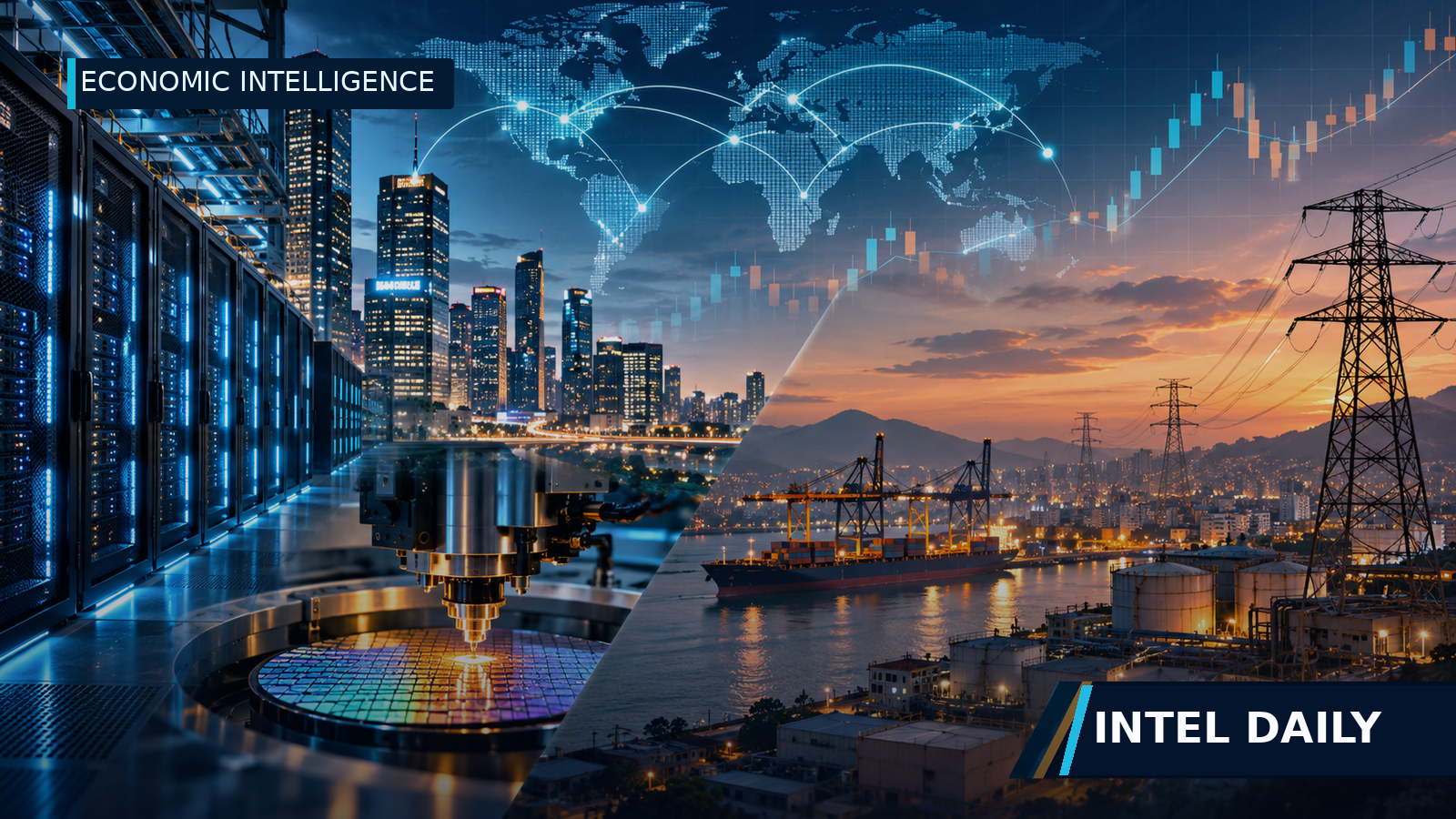
The Fund’s October outlook finds global resilience masking a widening gap between technology-led winners and energy-dependent economies.
The global economy is still expanding, but the engines supporting growth are increasingly uneven. The International Monetary Fund expects world output to rise 3.1% in 2026 before improving to 3.4% in 2027, with investment tied to artificial intelligence helping offset the damage from higher energy costs and geopolitical tensions.
Its October World Economic Outlook places a warning alongside those numbers: growth is not reaching countries equally. Economies supplying technology infrastructure benefit from new demand, while many energy importers face higher bills and little direct participation in the boom.
For investors and policymakers, the distinction is more useful than the headline growth rate. It identifies where demand is concentrated and where fiscal and balance-of-payments pressures may emerge next.
Two economies under one forecast
The IMF expects global headline inflation to reach 4.7% this year and ease to 4.1% in 2027. That does not mean all households will experience the same price changes. Countries reliant on imported fuel and food can face more persistent pressures than those exporting technology or commodities.
The Fund identifies conflict escalation, renewed trade tensions, fiscal vulnerabilities and a sudden reassessment of AI expectations among the principal downside risks. Continued productivity gains from technology would support an upside scenario, but these remain possibilities, not assured outcomes.
This is a particular challenge for governments already carrying high debt-service costs. More expensive imports can strain foreign-exchange reserves, while efforts to cushion consumers may reduce resources available for investment.
The concentration of technology gains
The World Trade Organization’s October data show how powerful the hardware cycle has become. AI-enabling goods contributed 47% of the increase in world merchandise trade value in the first half of 2026. A narrow set of suppliers therefore exerts outsized influence on international trade growth.
A strong market for servers, advanced chips and networking hardware can generate investment and trade even while other sectors struggle. It can also leave economies exposed if spending plans are delayed or scaled back.
This concentration should not be confused with a general technological productivity transformation. Building data centres adds near-term demand; realizing economy-wide efficiency gains takes longer and depends on adoption beyond the technology industry.
Policy choices under pressure
UN Trade and Development’s 2026 report projects weaker overall growth using its own modelling framework and highlights how developing regions face different prospects. Forecasts from the two institutions are not directly interchangeable, but both point to unequal benefits from technology-led expansion.
The IMF argues that governments should rebuild fiscal space and preserve monetary stability. Its analysis of cost-of-living shocks favors temporary, targeted support for vulnerable households over broad price suppression, which can be significantly more costly.
The pattern also matters for exchange rates and cross-border investment. When growth is concentrated in a handful of technology exporters, countries outside that network may receive less foreign capital while paying more for essential imports. That combination can weaken domestic demand even without a conventional recession.
These recommendations pose difficult political choices where household budgets are already stretched. Reducing support too abruptly can be destabilizing, while unlimited subsidies can impair government finances.
What decision-makers should watch
The next indicators are whether AI capital expenditure translates into broader productivity, whether energy supply disruptions ease, and whether borrowing costs stay manageable for economies outside the technology supply chain.
A world growth rate above 3% may look resilient. The IMF’s more important message is that resilience rests on an uneven set of industries and countries. Understanding that divide is essential to evaluating the durability of the recovery.
SOURCE REFERENCES
https://www.imf.org/en/publications/weo/issues/2026/10/13/world-economic-outlook-october-2026
https://www.wto.org/english/res_e/publications_e/global-trade-outlook-and-statistics_execsum_e.htm
https://unctad.org/publication/trade-and-development-report-2026