


WHO Says 1.41 Billion Still Need Neglected-Disease Interventions

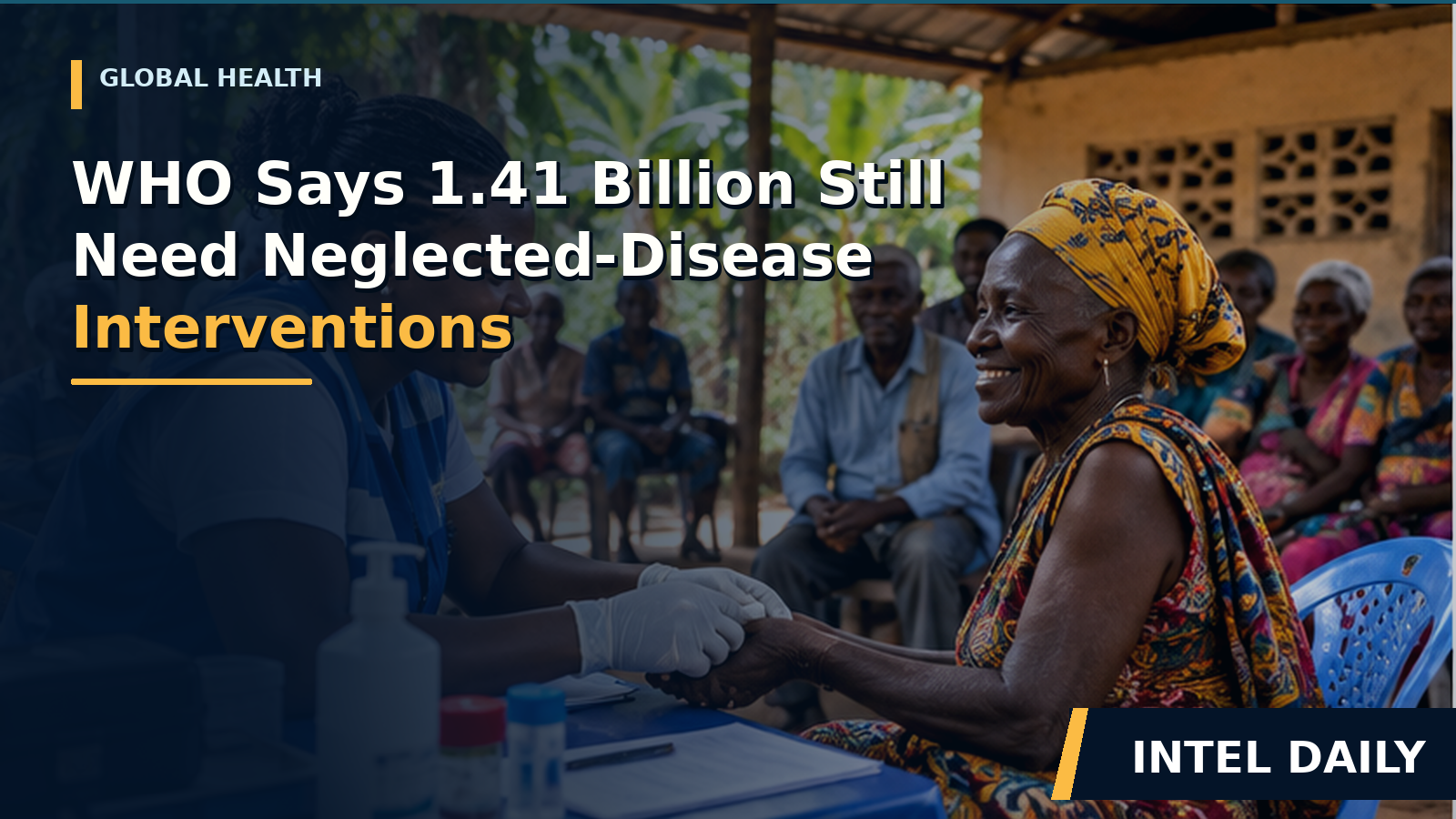
A midterm review finds real gains against tropical diseases, but underfunding threatens efforts to meet 2030 goals.
Global efforts against neglected tropical diseases have made measurable progress, but more than 1.4 billion people still require interventions and several international targets are falling behind schedule, according to a new World Health Organization assessment.
The WHO midterm review of its 2021–2030 road map, released November 4, reports that 1.41 billion people required interventions in 2024, a 36% reduction from 2010. By June 2026, 63 countries had eliminated at least one neglected tropical disease.
These numbers describe population-level progress, not the disappearance of all risks. The WHO warns that external funding is contracting while surveillance, treatment and preventive programs remain incomplete in many countries.
Progress is real but uneven
Neglected tropical diseases include infections and other conditions that disproportionately affect poorer communities. They can cause disability, stigma and lost work or schooling even when they attract limited global attention.
Some progress results from sustained mass drug administration, improvements in water and sanitation and coordinated campaigns targeting specific diseases. But success in one national program cannot be assumed to extend to every condition or region.
The new review covers 21 diseases and disease groups. WHO assessed 71 global indicators, drawing on evidence from more than 350 officials, researchers and program managers. It found that most indicators remain below the milestones needed for 2030, and neither global eradication program is on track.
A financing problem
Health ministries often depend on international grants to support disease mapping, treatment distribution, laboratory networks and community-based prevention. When financing weakens, a country may continue to record earlier gains while losing the capacity to detect renewed transmission.
That is particularly risky near the end of an elimination campaign. Sustained surveillance can be necessary long after reported case numbers fall, because a missed outbreak may reverse years of investment.
WHO identifies stronger domestic financing as a priority for the second half of the decade. However, countries facing debt-service costs and competing health demands may struggle to replace donor funding quickly.
Integrated care and equity
The WHO report notes that 43 countries have adopted integrated strategies for skin-related neglected tropical diseases, already exceeding the 2030 target for that indicator. Shared clinical services can help workers recognize multiple conditions, improve referral systems and reduce duplicated administrative costs.
Integration must still be measured by whether patients receive effective diagnosis and treatment. Combining reporting forms without training or medicines would not achieve the same result.
Equity is central because the communities hardest to reach may be the last to benefit. Remote settlements, mobile populations and households unable to pay for transport can remain underserved even after national indicators improve.
The test through 2030
WHO’s road map calls for coordinated action on health systems, water and sanitation and reliable data. Investment decisions should consider the cost of preventing resurgence as well as the expense of reaching the remaining population.
A better performance measure would track coverage, treatment success and sustained absence of transmission alongside national elimination declarations.
The latest assessment offers a balanced picture: disease-control programs have demonstrated results, but their success is fragile where financing and local health capacity cannot be maintained. The remaining years of the decade will test whether progress reaches those still excluded.