

Supreme Court weighs Catholic preschools’ challenge to Colorado funding rules

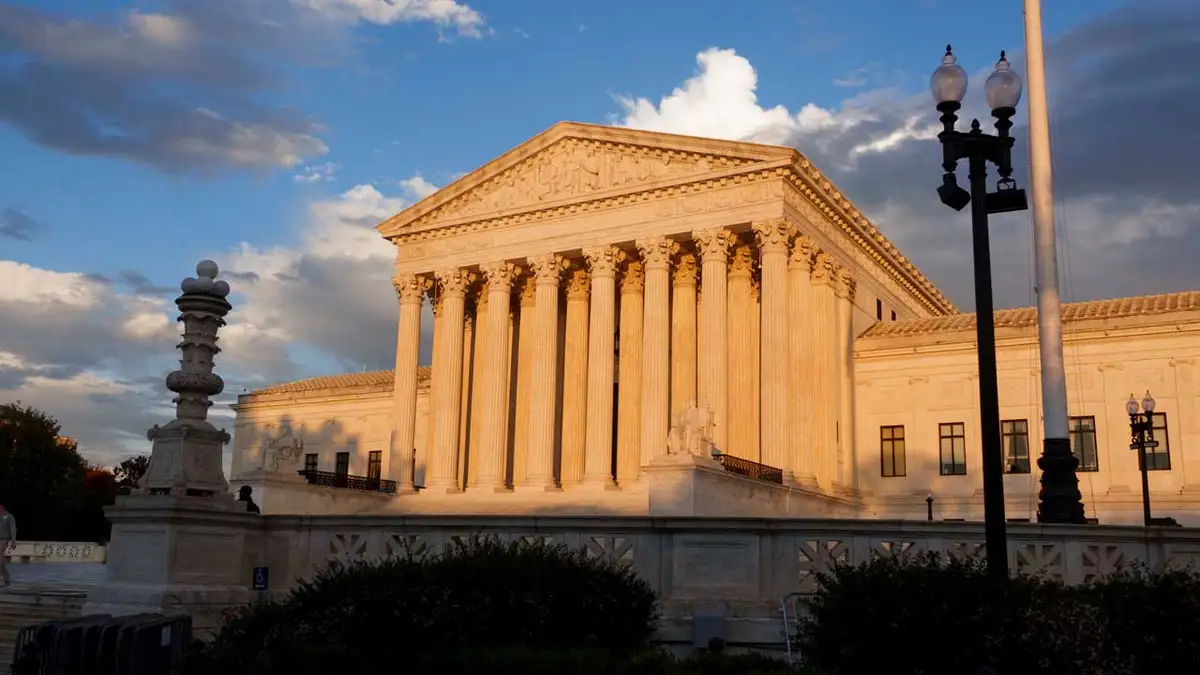
WASHINGTON — The Supreme Court heard arguments Nov. 3 in a dispute over whether Colorado can require Catholic preschools to follow its equal opportunity rules as a condition of receiving state preschool funding.
The case, St. Mary Catholic Parish v. Roy, places two claims of equal treatment in direct conflict. The schools say the state is excluding families because the schools follow Catholic teaching. Colorado says public money should support programs that offer children equal access.
The court’s docket identifies Nicholas Reaves as the schools’ advocate and Colorado Deputy Solicitor General Helen Norton as the state’s lawyer. Principal Deputy Solicitor General Sarah Harris argued for the federal government in support of the schools.
Two competing positions
At the hearing, Reaves said the schools exist to transmit their faith and ask enrolled families to support their religious teaching. He argued that denying access to preschool funding on that basis triggers the most demanding form of constitutional review.
Norton disputed that the program targets religion. She said Colorado created a mixed system of public and private providers with equal opportunity requirements, and that religious schools can participate while continuing to teach religion. She defended applying the program’s admissions requirements to all participating providers.
The dispute includes the treatment of children whose parents are in same-sex relationships and schools’ ability to prefer families sharing their faith. Those questions connect admissions policies to religious identity rather than simply asking whether a classroom may contain religious instruction.
The official argument transcript shows justices probing the scope and consistency of Colorado’s rules. Questions at an argument can test a position’s limits; they do not themselves establish the court’s eventual holding or a reliable vote count.
Earlier funding cases loom large
First Liberty Institute, which supported the schools in a friend-of-the-court filing, said the state’s conditions amount to religious discrimination. In its statement following the hearing, the organization pointed to the Supreme Court’s earlier decisions protecting religious participation in broadly available public benefits.
Its brief on behalf of Crosspoint Church argues from the experience of a Maine religious school and the litigation that followed Carson v. Makin. The filing asks the justices to prevent states from using participation conditions to preserve exclusions that earlier decisions rejected.
That is an advocate’s argument, not a description of a result already reached in the Colorado case. Colorado maintains that its policy protects equal opportunity rather than singling out religious teaching for disfavor.
The practical question for families
For a family comparing preschool options, the dispute concerns where a public benefit can be used and which conditions travel with it. For a religious provider, it concerns how far participation in a public program can require changes to admissions practices grounded in doctrine.
The distinction matters because a state can fund a service through many independent providers without operating each institution itself. The constitutional argument then focuses on the conditions attached to participation and their effect on religious exercise.
A decision could clarify that boundary, but the hearing did not resolve it. Schools, parents and state administrators still must distinguish the parties’ requests from the rules the court ultimately adopts.
The case will be decided through a written ruling after argument. Until then, claims that either side has already won go beyond the procedural record. The competing questions remain whether Colorado’s conditions are neutral and whether applying them unlawfully burdens the schools’ religious mission.