

Appeals court revives faith groups’ challenge to immigration enforcement at worship sites

WASHINGTON — A coalition of Christian and Jewish organizations can move forward with its challenge to a Trump administration policy allowing immigration enforcement at houses of worship after a federal appeals court reversed an earlier denial of preliminary relief.
The Oct. 20 ruling by a divided panel of the U.S. Court of Appeals for the District of Columbia Circuit returns the dispute to the lower court. It does not by itself impose the nationwide restriction on enforcement sought by the religious groups.
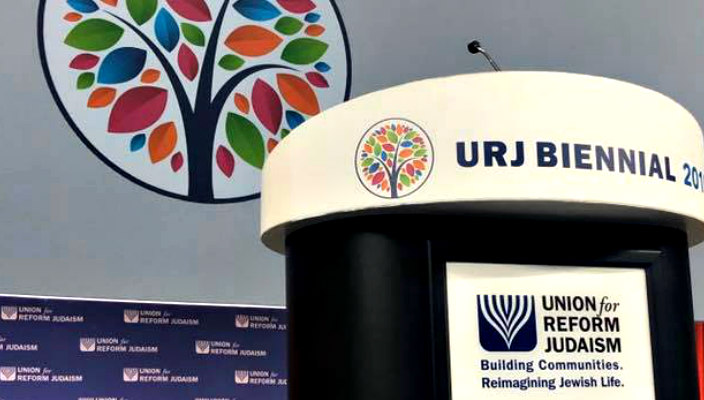
In an Oct. 22 update, the Union for Reform Judaism said the appellate court found an imminent risk of enforcement activity at or near the plaintiffs’ worship sites. The organization emphasized that an injunction still had to be pursued in the district court.
The union and the Central Conference of American Rabbis joined more than two dozen religious denominations and associations in challenging the reversal of the earlier sensitive locations policy. They argue that the enforcement change interferes with their religious ministries.
A multifaith coalition
United Methodist News reported that Judge Florence Pan wrote the majority opinion, joined by Judge Robert Wilkins. Judge Neomi Rao dissented. The lawsuit is Mennonite Church USA v. Department of Homeland Security.
The plaintiffs include the United Methodist Commission on Religion and Race and three United Methodist conferences, along with other Christian denominations and Jewish organizations. The coalition’s different traditions share an objection to immigration enforcement that they say can discourage people from participating in worship and ministry.
According to the denomination’s news service, the suit was filed in February 2025 after the administration changed its policy the previous month. The groups sought restrictions on enforcement without a judicial warrant or special circumstances.
The appeals court’s consideration of whether the organizations could establish injury was a threshold question. Demonstrating sufficient grounds to pursue a case is different from obtaining a final judgment that every challenged enforcement practice is unlawful.
The religious liberty argument
The coalition invokes the First Amendment and the Religious Freedom Restoration Act. The federal statute generally bars the government from substantially burdening religious exercise unless it can justify the burden as the least restrictive means of pursuing a compelling governmental interest.
That test requires attention to both the burden on religious practice and the government’s justification. A law can serve an important public purpose and still raise questions about whether a particular application is unnecessarily restrictive.
The statute also provides a way to assert a violation in a judicial proceeding and seek appropriate relief. Applying its requirements to the facts of this immigration dispute remains part of the litigation.
What the ruling changes
The immediate change is procedural: the organizations’ challenge has been revived, and their effort to obtain an injunction can continue. The ruling should not be read as creating an automatic exemption from immigration law for everyone entering a religious building.
Nor does the case establish that every encounter near a worship site has the same legal significance. The location, circumstances, claimed effect on ministry and requested remedy matter when a court evaluates the policy’s application.
The dispute draws together two questions often debated separately: the government’s authority to enforce immigration law and religious organizations’ freedom to carry out their work. The plaintiffs seek a judicial limit on how that authority is exercised at worship sites.
For congregations following the case, the next meaningful development will be the lower court’s consideration of relief. The appellate ruling reopened that path; it did not complete it.