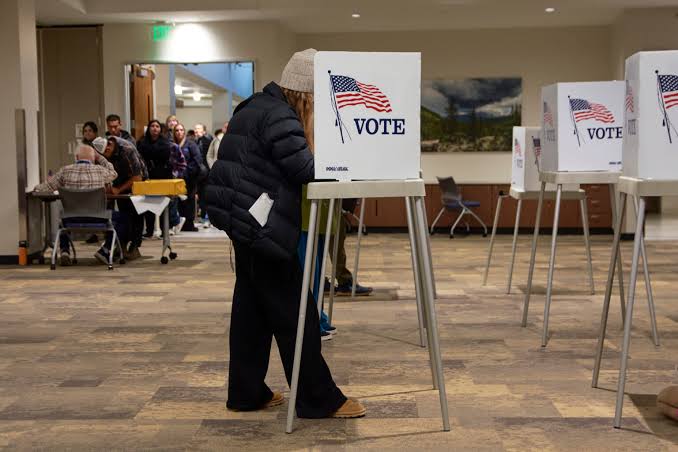
Voter ID wins in three states even as Democrats sweep midterms
Nevada, North Carolina and Ohio wrote ID requirements into their constitutions, while California, Colorado and Arizona voters said no.

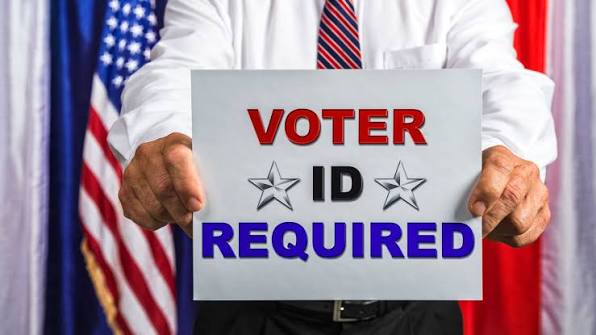
CARSON CITY, Nev. — Voters in Nevada, North Carolina and Ohio approved constitutional amendments requiring identification to vote, a set of wins for election-integrity advocates on a night when Democrats otherwise dominated.
Nevada voters approved Question 7 by 62.2% to 37.9%, making Nevada the 37th state to require voters to show identification to cast a ballot in person and the 25th to require photo ID, according to Ballotpedia. The measure also requires mail voters to provide identifying information, making Nevada the 41st state to require an ID or ID number for mail ballots.
Before the vote, Nevada was one of 14 states that did not require identification to vote in most cases.
Two-step approval
Nevada requires voter-initiated constitutional amendments to pass in two consecutive general elections. Voters first approved the voter ID measure in 2024, and this year’s vote completed the process.
President Donald Trump supported the Nevada measure. His administration has been an outspoken proponent of voter ID laws.
North Carolina and Ohio
In North Carolina, voters approved an amendment requiring photo identification for both in-person and mail voting with about 60% support. In Ohio, Issue 3 passed with about 65% of the vote.
Ohio already required photo ID for in-person voting under state law. The amendment places that requirement in the state constitution, where it cannot be changed by legislation alone.
Both states also elected Democrats to the U.S. Senate on Tuesday, a sign that support for voter ID crosses party lines.
Defeats in the West
Voter ID did not win everywhere. California voters rejected Proposition 39 with about 60% voting no. The measure would have required in-person voters to show ID at the polls and mail voters to provide the last four digits of an identification number.
Opponents in California argued that voters’ identities are already verified when they register and that millions of eligible residents lack a current state driver’s license. Supporters had pointed to federal estimates that tens of thousands of noncitizens may be registered in the state.
Voters in Colorado and Arizona also rejected measures related to voter ID. The three defeats this year match the total number of voter ID measures defeated between 2004 and 2025, according to Ballotpedia.
A record year
Including an August vote in Oklahoma, where a voter ID measure passed with 54.6%, voters decided seven voter ID measures in 2026, the most in a single year. The previous high was three in 2022.
Voters also approved measures stating that only U.S. citizens may vote in Alaska, Arkansas, Kansas, West Virginia and South Dakota, according to The Daily Signal.
Nationally, all 23 states that had a Republican trifecta before the election also have voter ID requirements, as do six states with a Democratic trifecta, Ballotpedia found.
Federal fight over
The results come as hopes for federal voter ID legislation have faded. Trump pushed Congress to pass the SAVE America Act, which would require proof of citizenship to register to vote, before the midterms. With Democrats taking control of both chambers in January, the bill is unlikely to advance.
Supporters of voter ID say the state results show the policy remains popular regardless of which party is winning. Polls have long found majority support for photo ID requirements.
Opponents say the requirements can make it harder for elderly, rural and low-income voters to cast ballots and are a solution to fraud that is rare.