

Los Angeles Cargo Growth Tests the Whole Freight Network

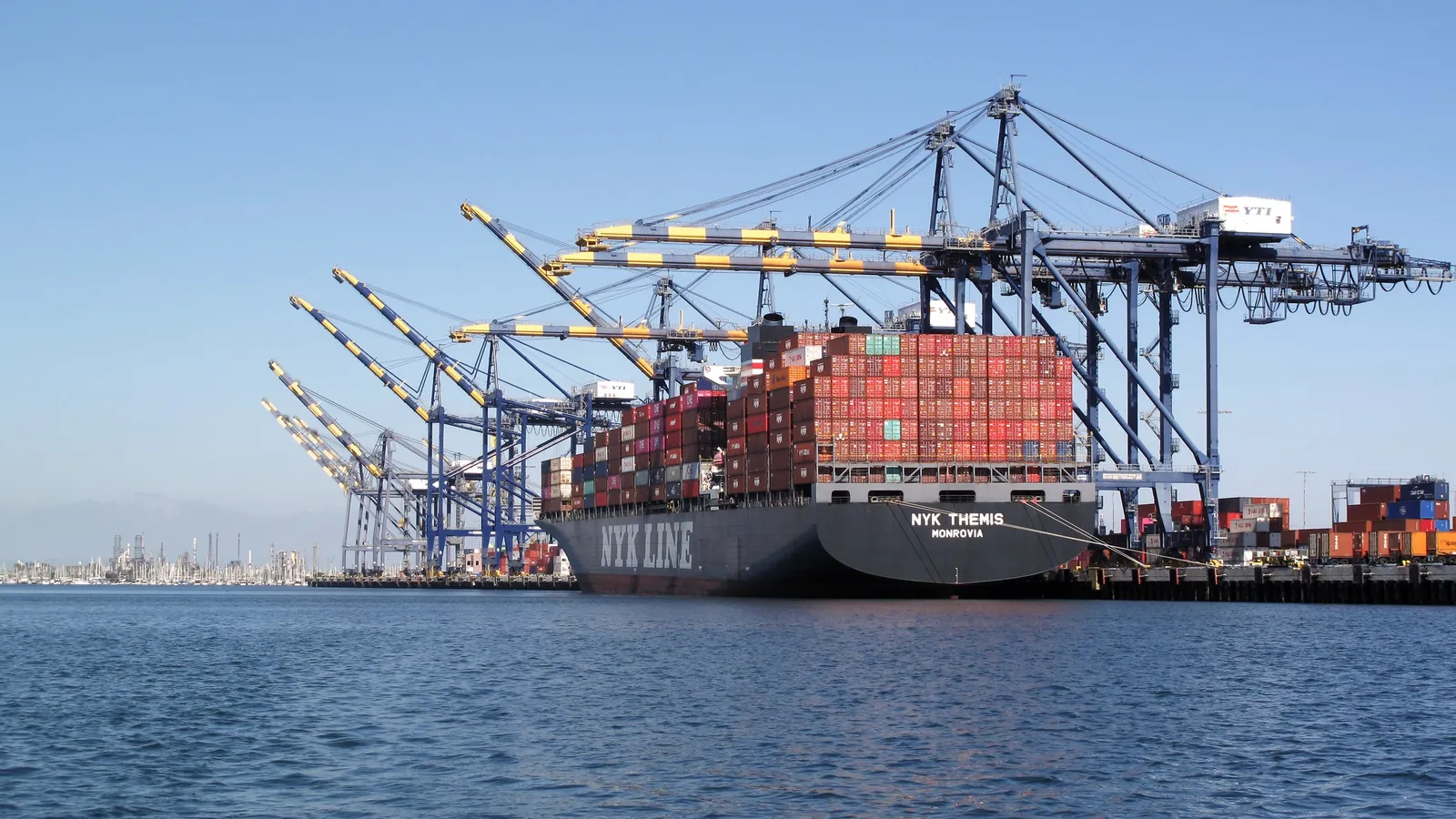
Container units handled through October 2026, rounded TEUs.
A busy container port depends on much more than the cranes visible from the waterfront. In its November 12 cargo update, the Port of Los Angeles reported handling approximately 9.1 million twenty-foot equivalent units through the first ten months of 2026. The volume raises a wider question: whether roads, rail, warehouses and operating arrangements can support dependable movement beyond the dock.
The figure is rounded and covers January through October. It is not the final annual total, a count of individual boxes or the value of the cargo. A twenty-foot equivalent unit, or TEU, is a standard capacity measure. Keeping the unit and period visible helps prevent a large throughput number from becoming an imprecise claim about economic activity.
Look past the waterfront
A container that leaves a ship still needs to reach its next destination. The value of additional terminal capacity can therefore depend on connections outside the port boundary. A project proposal should identify the constraint it addresses and explain whether the surrounding network can accommodate the expected flow, rather than assuming that more dockside capacity automatically removes delays everywhere.
The Bureau of Transportation Statistics’ port methodology shows why comparisons require care. Port measures can differ in their treatment of loaded and empty containers and in the purpose of the ranking. A statistic from a port’s operational release should not be casually substituted for a measure compiled under a different national methodology. Definitions influence what a comparison actually shows.
For shippers, the practical concern is predictability. An acceptable average can conceal difficult peaks, inconsistent handoffs or uncertainty about when cargo becomes available. Performance assessment should examine the part of the journey a project intends to improve. A broad annual total may establish scale without explaining the particular service problem customers experience.
Investment choices also involve timing. New equipment, transport connections and operating changes may reach completion on different schedules. Reporting should identify which dependencies remain unresolved. A facility can be physically expanded while the full commercial benefit still depends on another project, a change in staffing or an arrangement with a connecting operator.
Make the public case specific
Public support for freight infrastructure should explain who benefits and who carries the continuing cost. A project may serve local businesses, national commerce and private operators at the same time. Those benefits can be legitimate without being identical. Clear allocation of responsibility makes it easier to assess the public contribution and manage the asset after construction.
Communities surrounding the network need understandable information as well. More cargo can affect traffic and the demand placed on local infrastructure. The project case should show how those effects are considered and which organization is responsible for addressing them. A national economic argument does not remove the need for a workable local operating plan.
Commercial demand should remain part of the assessment. A period of strong throughput is important evidence, but it does not guarantee that every proposed expansion will be used as planned. Investors and public bodies need an account of the assumptions behind capacity decisions and what happens if volumes or routing choices change.
Reporting after an award should connect expenditure with delivered capability. Contracts signed, equipment installed and dependable service achieved are separate milestones. Making those stages explicit allows progress to be recognized without presenting an unfinished project as though it were already producing the intended result.
The Los Angeles volume demonstrates the scale of America’s freight gateway. The policy test is whether the whole network can support that activity reliably and at a defensible cost. A useful port agenda follows cargo beyond the quay, connects projects to identifiable constraints and keeps delivery responsibilities visible.