

Truck Parking Is a Freight Capacity Problem Hiding in Plain Sight

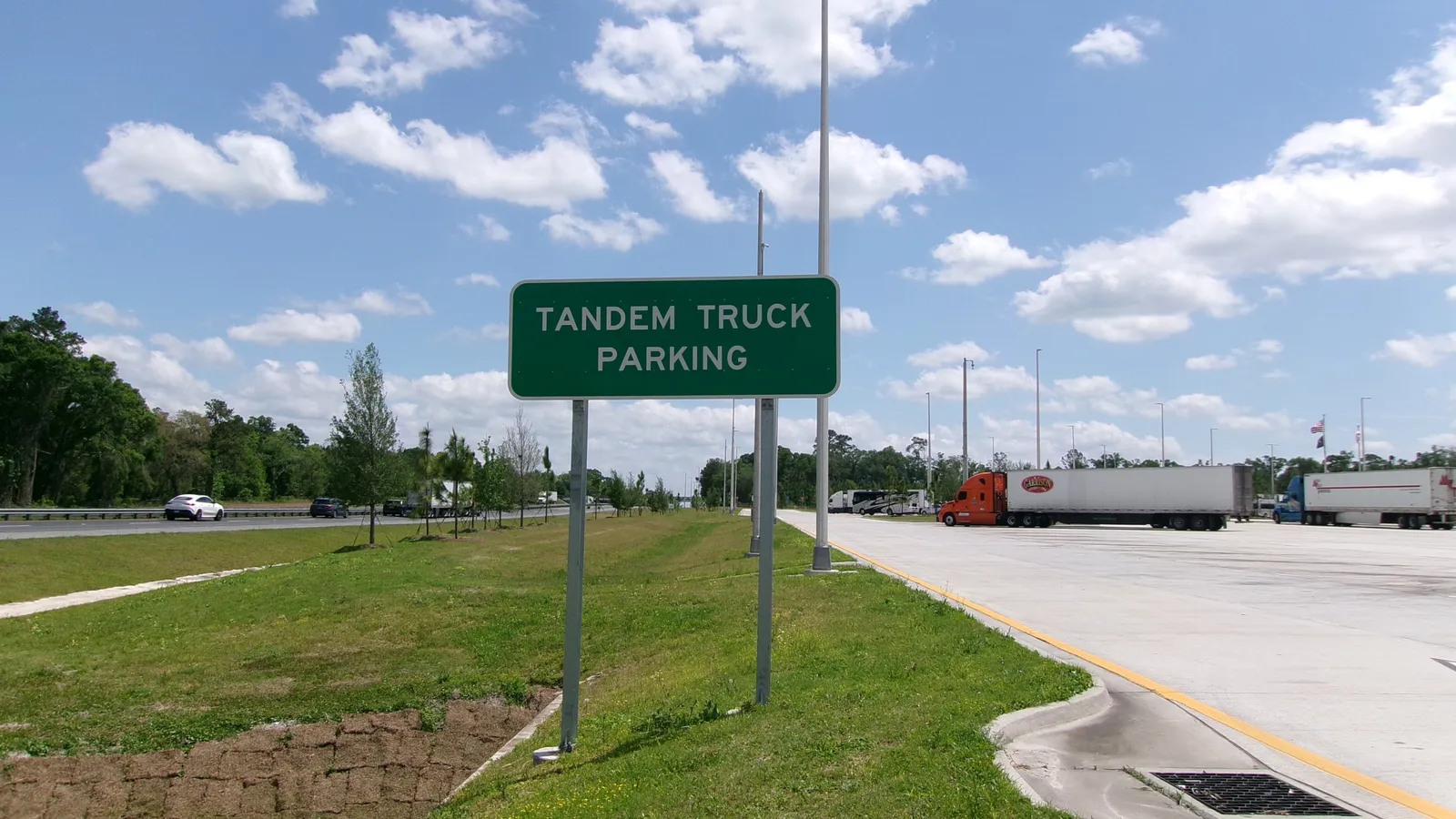
Surveyed drivers reporting problems finding safe parking.
Freight policy often focuses on highways, warehouses and port gates. A driver reaching the end of a shift faces another essential requirement: somewhere appropriate to stop. In the Federal Highway Administration’s presentation of its truck parking survey, 98 percent of responding drivers reported problems finding safe parking. The historical finding makes parking a legitimate freight infrastructure issue.
The figure comes from the survey period discussed in the agency’s 2020 presentation. It is not a new 2026 measurement, a count of all American drivers or proof that every location lacks spaces today. Its value is to show a documented problem that planners should assess against current corridor conditions before deciding where additional investment is justified.
Match spaces with actual demand
A parking space is useful only if a driver can reach and use it at the relevant time. A regional total may conceal a shortage near a busy delivery area or along a particular route. Planning should therefore consider location and operating conditions, rather than treating every additional space as an equal contribution to the freight network.
FHWA’s discussion of truck parking in Public Roads places the survey findings in an operational context. For project assessment, the key question is what obstacle the proposal resolves. A site intended for overnight rest may serve a different need from a staging area used while waiting for a delivery appointment. Those functions should be clear before capacity is counted.
Private operators and public agencies can have different roles. Commercial facilities need a workable business model, while public bodies have responsibilities for their own land and transport systems. A useful approach identifies the particular gap and considers which arrangement can sustain the service. It should not assume that every shortage requires the same funding or ownership model.
Land-use decisions are part of that assessment. A warehouse can create freight activity without providing all the space associated with its operations. Local review should make the relevant responsibilities explicit. Otherwise the effects may appear on nearby roads or public areas, where the people managing those spaces were not part of the original commercial arrangement.
Evaluate operation as well as construction
A proposal for more parking needs a realistic account of access, maintenance and ongoing management. Construction establishes the asset, but service depends on keeping it usable. Those obligations should be visible when public support is considered. A site that cannot be operated reliably may deliver less practical capacity than its advertised number of spaces suggests.
Information systems can help drivers understand availability, but information cannot create a physical space where none exists. Equally, new spaces may be underused if drivers cannot find them or use them when needed. The project case should distinguish the problem being solved by better information from the problem requiring an actual change in capacity or access.
Performance reporting can follow ordinary operating questions. Is the site available during the intended hours? Does it serve the traffic identified in the original assessment? Have access problems or maintenance obligations changed? Those measures can reveal whether an investment is meeting a useful need without pretending that one facility resolves an entire regional shortage.
Communities should also be able to understand the local effects. A proposal can support freight movement while raising questions about surrounding roads, neighboring uses and public services. Addressing those matters early is part of making the project workable, rather than a separate exercise after the location has already been treated as settled.
The survey statistic establishes a serious historical signal. The stronger response is current, location-specific analysis followed by projects that can remain useful in daily operation. Truck parking belongs in freight planning because reliable goods movement depends on the practical conditions under which drivers work and stop.